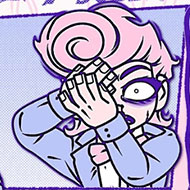
What do you say to someone who cannot answer? In The Somnolent Prince, Goro Akechi says it out loud, day after day, to a sleeping Ren Amamiya, and the game turns that one-sided conversation into its emotional engine. This is a Shuake visual novel that treats the quiet after the Third Semester Deadline Ending as the real story rather than an epilogue. It borrows the look of a Persona RPG, but at heart it is about two people and a routine that ends in the same place every night. Anyone who has wondered what happens to Akechi once the credits roll will recognise the question it is asking.
Talking to a Sleeping Ren in The Somnolent Prince
The daily routine is the fixed point of the whole story. Goro wakes up, puts on a TV show or opens a book, leaves the house, finds something to eat and rides the subway to Ren’s bedside. After the visit he takes the subway again, and instead of going home he heads for Odaiba. Because nobody answers him at Ren’s side, every line Goro speaks carries more weight than it would in a normal dialogue scene, and readers who love interior monologue will find that this suits them perfectly.
The relationship between Goro and Ren is already established when the story begins, so the question is not whether they will get together. It is what an existing bond looks like when one half of it cannot respond. The story also takes its own spin on canon, which means the emotional beats come from a new angle rather than a retelling of the original ending.
The tone is quiet, repetitive and a little hypnotic. That sameness is deliberate, and it is what makes the break from routine hit harder.
Where the Story Sits After the Third Semester
The Somnolent Prince is a Persona 5 Royal fangame set after the Third Semester Deadline Ending. Royal’s Third Semester gave Akechi a key role in the story, and the optional Confidant scenes between him and Ren already hinted at a bond that outlasts the main plot. The fangame starts from that point and asks what comes next for a character whose fate the original left deliberately open.
The author is honest about a limitation: the game can be enjoyed as a standalone, but players who do not know what happens in Royal will most likely be confused at times. Persona fans who have finished the Third Semester will get far more from the opening scenes, because they will recognise what the daily routine is circling. Newcomers should read a plot summary of Royal’s final arc before starting.
Even experienced fans should expect surprises. The story bends canon instead of repeating it, so familiarity with the Phantom Thieves’ world helps but does not tell you where things end up.
Choices, One Social Link and RPG Window Dressing
Most of the game is reading, with choices that shape where the story goes. It includes a single Social Link, the same relationship mechanic Persona 5 Royal calls a Confidant, and the author also lists what they call fake RPG mechanics. The Social Link makes sense for a story about an established relationship, since it tracks closeness that already exists instead of leading a courtship.
The word fake is accurate. These are RPG trappings laid over a visual novel, not a real battle system, so players hoping for tactical combat or stat building will be disappointed. Readers who like the Persona atmosphere without needing a combat loop will not mind at all.
Think of the RPG touches as window dressing that echoes the series’ look while the real weight stays on dialogue and consequences. The Odaiba stretch of the routine is where that framing matters most, and it is best discovered by playing rather than being explained in advance.
Who Should Read The Somnolent Prince, and Who Should Wait
Shuake fans and Royal veterans who enjoy tragic, slow-burning stories are the clear audience. The game is tagged as psychological horror, and its multiple endings reward a second run, which suits a story built around a repeating day. Readers who like to see how small choices change the outcome will find plenty to revisit.
If you have not finished Persona 5 Royal, or if you want action and combat, it is worth waiting. The story is also heavy: Goro’s death in Odaiba is part of the daily routine described by the game itself, so readers who are sensitive to themes of death and grief should know that before starting.
For the curious, the author also offers a behind-the-scenes document that shows how the story was put together. It is optional, but it is a nice extra for readers who finish the game and want to know more.
Quick Answers for New Readers
Can you play The Somnolent Prince without finishing Persona 5 Royal?
You can read it as a standalone, but the author warns that players who do not know what happens in Royal will probably be confused at times. The story depends on Akechi’s fate, Ren’s situation and the Third Semester Deadline Ending. A short plot summary of Royal’s last arc is enough to follow along.
Is it a romance or a horror story?
It is both. The established relationship between Goro and Ren drives the emotional side, while the psychological horror tag points to the dread of a repeating routine that ends in Odaiba. The tone leans toward tragedy and atmosphere rather than jump scares.
Does the game have more than one ending?
Yes, multiple endings are part of the design. A story built around a looping day naturally invites replay, so expect to try different choices to see how Goro’s routine and his time with Ren can turn out differently.
The Somnolent Prince puts one question at the centre of every day: what is the point of talking to Ren when he cannot reply, and where does Goro go afterwards? The single Social Link, the Odaiba trips and the multiple endings are all there to answer it, and the answers are worth seeing for anyone who still cares what happens to Akechi.