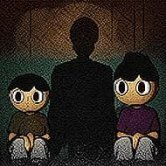
You raise the Polaroid in Grandma’s Livingroom, press the shutter, and the print shows something the room was hiding. That small habit drives Beyond The Frame, a first-person psychological horror game set inside the dreams of an 11-year-old named Charlie. The rooms look quiet and oddly domestic, and the dread comes from how wrong ordinary spaces feel once a child’s anxieties start rearranging the floor plan.
| Genre |
Psychological horror, exploration |
| Players |
Single-player |
| Perspective |
First-person |
| Tools |
Polaroid camera and Flashlight |
Dream by Dream Through Beyond The Frame
The demo opens in Grandma’s Basement, where a playmat, a table fan, and a staircase to the book-table set the scene, then moves into Grandma’s Livingroom, where a wall clock ticks and tissues flutter in the breeze from the fan. Those first rooms feel like a real house on a slow afternoon. By the time you reach An Overwhelming Kitchen, the calm has turned crowded and loud, and each dream after it pushes the logic further through A Confusing Hallway, A Stressful Livingroom, A Precarious Lobby, A Slippery Gallery, and A Parlous Bridge. Read in order, the names alone sketch a child’s mind sliding from comfort to stress to vertigo.
Traversal carries much of the tension in this horror game. You walk, run, crouch, and go prone, with a toggle option so holding keys does not wear out your hand, and A Slippery Gallery asks you to cross a balance beam. A Stressful Livingroom turns into a stair-maze with gramophones playing and a Security TV watching.
The demo closes after TV Room, An Uncanny Street, and A Liminal Snowscape, where the credits roll.
The Polaroid and the Flashlight
Your two tools set the tempo in Beyond The Frame. The Polaroid hangs from a strap and bounces a little against your tummy, you can see yourself when it is raised, and the flash controls come with in-game hints, all of which sells the feeling of a kid holding something slightly too big for small hands.
The Flashlight has its own thumb animation, and it is taken away at certain moments, notably during the stair-maze in A Stressful Livingroom, so the darkness feels intentional instead of accidental. The camera is the better detective of the two, because it can see things you cannot.
- Raise the Polaroid whenever a room feels too empty, since the viewfinder shows what your eyes skip.
- Read the flash hints before you panic in a dark corner.
- Check the edges of each dream for collectibles, which later updates made easier to find.
- Switch to the run, crouch, and prone toggle if holding keys gets tiring.
Completionists will want to chase every collectible, while players who prefer slow, methodical exploration will get the most from the viewfinder, which rewards patience over sprinting.
Where Beyond The Frame Gets Confusing
The demo has rough edges that players discuss openly. Early layouts confused people enough that A Confusing Hallway was reworked to be less confusing, and the stair-maze in A Stressful Livingroom was overhauled to be more interactive and less confusing too. Locked doors were also made more obviously locked.
Performance is the other debate. One player reported that low frame rates triggered motion sickness, while another praised how well the demo runs on a Steam Deck and asked for native gamepad support. Anyone prone to motion sickness should take the dreams in short sessions.
Rough patches come with any early demo, and the creators keep shipping patch notes that tighten movement, performance, and menus. One report described a freeze near a TV late in the demo, and another said video settings were not saving, so a little patience goes a long way.
Questions Players Ask Before Starting
Who Is Charlie in Beyond The Frame?
Charlie is the 11-year-old whose dreams you walk through. Each dream, from Grandma’s Basement to A Liminal Snowscape, turns a child’s anxieties into rooms, and the symbols hidden inside them are meant to be pieced together into the story.
What Does the Polaroid Do?
You photograph your surroundings as you explore, and the camera can see things you cannot. It has a strap, a flash with its own controls, and hints that explain those controls, and the photo now lines up closely with what the viewfinder shows.
Can You Play With a Controller?
Players have praised how smoothly the demo runs on a Steam Deck while asking for native gamepad support, so keyboard and mouse is the safe assumption. Run, crouch, and prone can be toggled instead of held, which helps during long sessions.
Beyond The Frame suits players who want to wander Grandma’s Livingroom and A Parlous Bridge at their own pace, camera raised, listening to a wall clock tick. It asks for patience with rough edges, but the Polaroid and the child’s-eye rooms give the dreams a distinctive shape that lingers after the credits in A Liminal Snowscape.