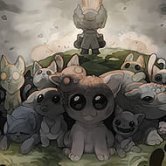
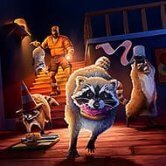
Mewgenics looks like a cartoon about collecting cats, but it plays like a tactics game that grades your family tree. Every cat you send out is a draft pick, and every cat that survives becomes a parent. What a cat can do today matters less than what its kittens will inherit.
| Genre |
Turn-based tactical roguelite with cat breeding |
| Setting |
Boon County |
| Party Size |
Four cats per adventure |
| Mode |
Single player |
| Scale |
900+ items and 1000+ abilities |
Collars and the Four Cat Party in Mewgenics
Each adventure begins when you choose four cats from your house and fit every one with a collar. The collar is the class system: Fighter, Hunter, Mage and Tank are open from the start, and a Collarless cat carries no class at all. Each collar adds its own stat bonuses, penalties and abilities, so the same cat can play like a different animal depending on what hangs around its neck.
Combat is turn-based on grids that change from run to run, and the terrain is part of your toolkit. Environmental interactions turn a fight into a puzzle about positioning rather than raw damage. Tactics fans will feel at home quickly, because the rules stay readable even when the board gets chaotic.
A common first mistake is fielding four Fighters and then wondering why nothing covers the gap. A Tank in front, a Hunter behind and a Mage with reach is a sturdier shape. Level-ups add abilities and passives, and some picks are overpowering while others quietly fall short.
Breeding at the House Is Where Mewgenics Really Starts
A cat that returns from an adventure is retired. It cannot go out again, but it can defend the house later on and, more importantly, it can breed. Survivors come home with experience, scars and gear, and the real prize is their DNA, because the skills and passives a cat picked up in battle can pass to its kittens.
The house is a small management sim in its own right. You decorate, you place the furniture your cats bring home, and you can put two chosen cats alone in a fancy room. Crowd the place and the rest of the cats get angry, so every breeding plan competes with space and mood.
- Send four collared cats out on an adventure.
- Bring the survivors home with food, money and gear.
- Retire the returning cats to the house.
- Pair two cats and wait for kittens that inherit stats, abilities and mutations.
- Raise the best kittens into the next four cat team.
Each pass through that loop is one generation, and collectors who want to keep every cat will watch the house fill up fast.
Mutations, Disorders and the Cost of Inbreeding
Kittens inherit more than strength. They also receive the mutations and disorders of their parents, which can be great powers or tragic flaws. Inbreeding sharpens that risk, since pairing closely related cats tends to produce offspring with mutations and deficiencies. A cat coming home from an adventure may carry scars, and sometimes an extra head.
Cats also age, and old age eventually takes them. That permanence gives the house its weight, because every cat is a finite resource.
Before pairing two cats, it helps to read what can travel down the line, because a clever shortcut can quietly poison a bloodline once several generations share the house.
- Abilities and passives from both parents
- Mutations that help or hurt in battle
- Disorders that may carry down the line
Early Money, Cat Food and the Fanciers
Money is a constant worry early in the game, and cat food is part of that worry. Every extra mouth in the house eats, so keeping a cat is a decision with a price. Runs bring home food, money and treasure to cover it, which is why one careless adventure can set the whole house back.
Fanciers in Boon County add a second reason to think about who you keep. They offer bonuses or new quests in exchange for cats with certain traits, so a cat with an odd mutation can be worth more as a trade than as a fighter. Players who love min-maxing will find plenty to chew on, because the best fighter is not always the best cat to keep.
Balance is the skill nobody hands you: how many cats the house can hold, who gets bred, and who gets given away for a perk. Early on, that usually means fewer cats than you want.
What Divides Players About Mewgenics
The loudest complaint is bookkeeping. The game offers little in-game help for tracking stats, genetics and breeding outcomes across a growing house, so plenty of players keep their own spreadsheets. That is a real cost for a game built around planning generations, and it can turn experimenting into homework.
Ability choices divide opinion too. Level-up picks can define a run or fall flat, and the randomness that keeps runs fresh also makes some of them feel unfair. Even so, many players describe a pull closer to obsession, with one more breeding cycle always waiting.
Small details soften the grind. You can pet the cats, and a mutated kitten that carries a fight is a moment players remember long after the run ends.
Questions Players Ask Before a First Run
How does cat breeding work?
Retired cats live in the house and can be paired, and kittens inherit stats, abilities, mutations and disorders from their parents. Putting two chosen cats in a fancy room helps you steer the pairing, but a crowded house makes the other cats unhappy.
Which collar should you start with?
Fighter, Hunter, Mage and Tank are all open from the first run, so no single choice locks you in. Because a team has four slots, covering the front line, damage and reach matters more than any one class. A Collarless cat is a gamble, since it gives up the bonuses and abilities a collar adds.
Do cats die for good?
Yes, in two ways. Cats can fall in battle during a run, and cats that make it home still age and eventually die in the house.
Mewgenics rewards the player who treats every Collarless runt and every retired Tank as a branch of one long family tree. Boon County will cost you a few good cats along the way, but the next litter always carries something you can use. Keep the house balanced, read the mutations before you pair, and the family you build will outlast any single run.