

BLOODMONEY!

Dead Plate

Elevator Hitch
Idle Breakout
LOVEMONEY!

My Buddy

Sort The Court: Royal Builder









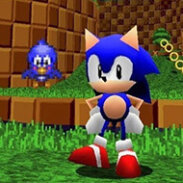










What happens when you press jump a second time in midair as Sonic and the thok launches you forward just as a Crawla rolls into your landing spot? In Sonic Robo Blast 2 that question gets answered within the first minute of Greenflower Zone, and the answer shapes how you play every zone after it: speed is a tool you aim, not a button you hold.
The thok is Sonic’s signature midair dash, and it is the first thing players have to unlearn from other 3D platformers. It sends you in the direction the camera is facing at a fixed burst of speed, which makes it brilliant for crossing gaps and terrible for precise landings on small platforms. New players thok into pits constantly because they treat it like a double jump rather than a committed launch. The fix is simple but takes practice: thok only when you can already see where you will land.
On the ground, the spindash does the heavy lifting. Holding spin while standing charges it, releasing it sends Sonic rolling, and rolling down slopes builds momentum the way the classic games trained everyone to expect.
Momentum is where the game feels most like its 2D ancestors. Running down a curved ramp carries you further than flat ground ever will, and rolling into enemies keeps you damaging them without stopping. Players who chain slopes, springs and spindashes together find routes through each act that never touch the slower main path.
Character choice changes the shape of every level. Sonic is built for speed and long jumps, Tails trades raw pace for flight that lets him hover over hazards and carry another player in co-op, and Knuckles glides and climbs walls to reach routes nobody else can touch. Amy swings her hammer for attacks and plays more deliberately, while Fang relies on his popgun and a tail bounce that turns platforming into a rhythm of hops. Each one makes the same zone feel like a different map.
Which character to start with is one of the most common beginner questions. A quick guide that most forum regulars would agree with looks like this:
Speedrunners lean heavily on Sonic, while explorers and completionists tend to prefer Knuckles for the alternate routes his wall climb unlocks. That split shows up in almost every discussion about which character is best.
Greenflower Zone, which the community just calls GFZ, is a gentle introduction with wide grassy paths, rings everywhere and the Egg Mobile waiting in Act 3. Techno Hill Zone follows with industrial machinery, conveyor sections and pools of toxic slime that punish careless thokking. Both zones teach you to read the level for springs and alternate routes rather than charging straight ahead.
Deep Sea Zone is the first real difficulty spike. Underwater sections slow your movement, and the drowning countdown chime that starts when your air runs low is a sound every Sonic fan recognizes instantly. Grabbing air bubbles from vents becomes as important as avoiding enemies.
Many players stall here for the first time. The combination of slow underwater physics and branching tunnels can leave you lost, and the safest strategy is to surface often and treat each air bubble vent as a checkpoint in your head.
By the time you reach Castle Eggman Zone, the game stops holding your hand. CEZ is built around a sprawling castle with maze-like corridors, swinging hazards and multiple ways forward, and Act 2 in particular has a reputation for being long and disorienting. Forum threads asking how to get through it are some of the most common beginner posts on the community boards.
The honest truth is that CEZ divides players. Some love its scale and exploration; others feel it drags compared to the tighter zones around it.
The best approach is to slow down. Look for signposts, follow ring trails, and remember that Knuckles and Tails can bypass large chunks of the castle. After CEZ come Arid Canyon Zone, Red Volcano Zone, Egg Rock Zone and finally Black Core Zone, where Dr. Eggman and Metal Sonic make the last stretch feel like a proper finale.
There are 7 Chaos Emeralds to collect, and finding them is the main long-term goal beyond simply finishing the campaign. Special stage tokens hidden in acts send you to bonus stages after the act ends, where you fly through a looping course collecting spheres before the timer expires. These stages feel quite different from the main platforming and take some getting used to.
Collecting all seven unlocks Super Sonic and the better ending, which is why so many players ask how to get every emerald on a single run. Missing even one sends you to the standard ending, so emerald hunting becomes the real campaign for dedicated players.
The trick is consistency rather than speed. Learn where tokens sit in each act, replay acts you missed, and practice the special stages until the flight controls feel natural. Shields help along the way:
Emblems are hidden collectibles scattered across every act, and they are what keeps people playing long after the credits. Some sit in obvious spots, while others require a specific character’s ability or a sharp eye for suspicious walls. Record Attack adds more emblems tied to finishing times and ring counts.
Collecting emblems unlocks extras, which gives completionists a steady reason to revisit zones they already cleared. Some emblems are trivial to grab, while others will send you scouring a single act for twenty minutes.
This is also where the game shows its depth. Players who chase emblems learn every shortcut, and the routing knowledge they build naturally makes them faster in Record Attack. It is a quiet loop that turns a twenty-something-act campaign into something people still play years later.
Multiplayer is half the reason the community stays so active. Match and Team Match turn rings into ammunition, CTF pits two teams against each other on dedicated maps, and Race mode is exactly what it sounds like. Co-op lets a group clear the campaign together, which is where Tails carrying a friend over a pit becomes genuinely useful.
Addons are the other half. Fans build custom characters, new levels and whole gameplay overhauls, usually shared as pk3 files on the community message board, and loading them is as simple as dropping them into the addons menu.
A word of caution for new players: jump into vanilla first. Many addons assume you already know the base physics, and some popular character mods are tuned for veterans who can handle extreme speed.
Compared to the classic 2D games, the biggest change is the third dimension. Momentum, springs and rolling all behave in recognizable ways, but you now steer through open spaces with a camera to manage. Players coming straight from the Genesis titles notice within two minutes that the thok and the camera are the real skills to learn.
Difficulty also feels different. The opening zones are easier than the classics because of the wide spaces and abundant rings, but later acts demand more precise platforming than anything in the 2D era.
Newcomers tend to hit the same walls in the same order. Three questions come up constantly:
Sonic Robo Blast 2 works best when you respect the thok, take Castle Eggman Zone slowly, and treat every special stage token as a step toward the 7 Chaos Emeralds and Super Sonic waiting at the end of Black Core Zone. Learn the thok first, and everything else in the campaign opens up.
