You swim up a freshly inked wall on the Spirhalite Islands, pop out onto a ledge, and find a pack of Seasoned Salmonids already circling the Spirhalite crystal you came to crack. Splatoon Raiders throws moments like that at you constantly, and how you handle the swarm decides how many shards you carry back to camp.
| Genre |
Co-op action adventure with looter-shooter elements |
| Your role |
The Mechanic |
| Co-op |
Up to 4 players |
| Main currency |
Spirhalite Shards |
Ink, Swim, Repeat: Core Movement in Splatoon Raiders
The fundamentals will feel familiar to anyone who has played the series. You paint surfaces with ink, swim through your own color to move fast and climb walls, and refill ink by submerging. The difference is that the whole adventure is built around fighting hordes rather than other players.
Painting terrain is not just for movement; it is how you control the battlefield. An uninked floor is slow ground, and slow ground is where swarms catch you.
Beginners often forget to ink escape routes before engaging a swarm. Experienced players paint a path back first, so they can retreat quickly if Seasoned Salmonids overwhelm them.
The Mechanic, Deep Cut and the Spirhalite Islands
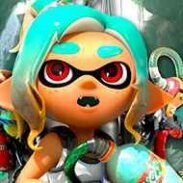
You play as the Mechanic, a pilot traveling with Deep Cut, the trio of Shiver, Frye and Big Man. The Spirhalite Islands have risen from the sea, and the group wants to explore them and recover treasure. Their banter keeps the tone light even when fights get intense.
Fans of Deep Cut will enjoy seeing them in a bigger story role. Shiver, Frye and Big Man trade jokes between missions that keep the trip feeling like a road trip.
The islands feel more grounded than previous Splatoon settings, with a mix of ruins, crystals and odd oversized objects. Exploration rewards curiosity, as hidden areas often hold upgrades.
Salmonids, Seasoned Salmonids and Boss Fights
Salmonids return as the main enemies, now on their home turf. Seasoned Salmonids are stronger variants that hit harder and take more punishment. Bosses guard key areas and require learning attack patterns.
By the time Seasoned Salmonids appear in numbers, your build matters more than raw aim. A careless loadout that worked on the first island collapses quickly against them.
Players familiar with Salmon Run recognize the enemy types, but the scale is different. You feel more powerful here, yet the swarms still demand smart positioning.
Gadgets, Ink Tanks and Crafted Weapons
The biggest mechanical change is that sub-weapons are attached to your Ink Tank rather than your main weapon. That lets you mix combinations more flexibly than in the main series. Crafting introduces new weapons and gadgets, from axes to paint turrets.
Build-making is a major part of progression. Most of your Spirhalite Shards end up flowing into it.
- Spirhalite Shards are the main currency for upgrades.
- Ink Tanks hold your sub-weapons, and upgrading them shapes your whole build.
- Crafted weapons let you specialize for certain playstyles.
- Gadgets support co-op teams and solo players alike.
Co-op Calls for Help and Difficulty Scaling
You can bring up to three other players into your game, and difficulty scales with group size. Calling for help lets other players join you in tough areas, and joining others can be a quick way to earn rewards.
- Use the call-for-help option when a boss or swarm is too tough.
- Join other players’ sessions to practice tougher areas.
- Coordinate builds so each player covers a different role.
Players who prefer solo play can lower difficulty instead. The lowest setting, playfully named Tourist, makes the game much more relaxed.
Where Splatoon Raiders Falls Short
The most common criticisms involve customization and novelty. Outfit options are limited, and some amiibo only unlock a classic Salmon Run outfit. Higher difficulties do not offer better rewards, which disappoints players looking for a reason to push harder.
Some critics also feel the core gameplay lacks innovation compared to the main series. Fans of the competitive modes miss the variety that ranked battles provided.
Players coming from the main series tend to wonder about the same things. Three questions come up often:
- How many players can join co-op? Up to four players can explore together, and difficulty scales with the number of players. Calling for help is a quick way to bring others into a tough area.
- What are Spirhalite Shards used for? They are the main currency, earned by breaking Spirhalite crystals across the islands. You spend them on upgrades and crafting.
- Is there an easy mode? Yes, the Tourist difficulty is the lowest setting. It makes the game much more forgiving for newcomers or relaxed play.
Splatoon Raiders rewards Mechanics who ink an escape route before every swarm, spend Spirhalite Shards on a smart Ink Tank build, and bring Shiver, Frye and Big Man along for the treasure hunt across the Spirhalite Islands. Paint first, fight second, and the islands give up their treasure.