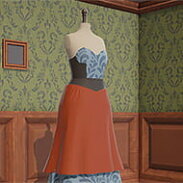
Dressmaker looks like a cozy dress-up toy, but plays like a real tailoring workshop where grain direction, bias cuts and seam order decide how the finished dress hangs on the mannequin. Every cut is a decision you will see on the final garment.
| Genre |
Cozy tailoring simulation |
| Fabrics |
Cotton, linen, wool, silk, velvet and more |
| Dress parts |
140 customizable pieces |
| Story length |
Around 35 hours |
From Sketchbook to Mannequin in Dressmaker
Every dress starts in your sketchbook. You design and color the garment there, pinning fabric samples and appliqué ideas before a single cut is made. Then you move to the cutting table, arrange the pattern pieces on your chosen fabric, cut them out and preview the panels on a mannequin before sewing. Nothing happens automatically, and that hands-on chain is the whole appeal.
The process feels slow at first. Within a few dresses, it starts to feel like a craft rather than a chore.
Players who sew in real life notice the attention to detail immediately. Many say the steps mirror the order they would actually follow at home.
Grain, Bias and the Cutting Table
How you place pattern pieces on the fabric shows up directly on the finished dress. Aligning a piece with the grain gives a clean, structured look, while cutting on the bias changes how prints and stripes fall across the panel. You also pick which fabric goes on each panel, so contrast sleeves or a velvet bodice over a linen skirt are entirely your call.
Beginners often ignore grain direction entirely. The result usually looks slightly off on the mannequin.
- Lay out every pattern piece before cutting anything.
- Decide panel by panel whether to follow the grain or cut on the bias.
- Choose fabrics per panel for deliberate contrast or harmony.
- Preview on the mannequin before committing to the sewing machine.
The Sewing Machine With an Infinite Bobbin
Feeding fabric through the sewing machine is the moment most players say the game clicks. You guide each panel under the needle to stitch it together, and the steady rhythm of the machine is oddly calming. The infinite bobbin removes the one truly tedious part of real sewing, so you never stop to rethread.
Careful guidance still matters. A rushed seam is visible on the finished piece.
Cozy-game fans tend to love this section most, since it combines focus with a gentle, repetitive motion. It is the closest thing the game has to a signature sound.
Buttons, Bows, Lace and Appliqué
Once the dress is sewn, decorating begins. Buttons, bows, appliqué and lace trims can be placed anywhere, and the game sets no rules about taste. That openness is why some players recreate famous outfits from shows and other games, while others build gloriously chaotic creations just to see how a customer reacts.
Decoration is where personality shows. Two players working from the same order will almost never produce the same dress.
Creative players will happily spend more time here than anywhere else. With 140 customizable dress parts, there is plenty to experiment with across a long campaign.
Townsfolk Orders, the Shop Window and Sabotage
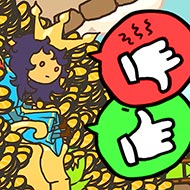
A whole town of customers wants custom dresses for weddings, parties and personal tastes. You can meet their requests carefully, or deliberately sabotage them with something they will hate. You can also hang your own designs in the shop window and sell them off the rack. Turning in dresses earns both reputation and coin.
The option to please or prank customers gives the story a playful edge. Some of the funniest moments come from intentional disasters.
Story-focused players will follow the townsfolk across the roughly 35-hour campaign. And between orders, there is always the kitty to pet.
Where Dressmaker Tests Your Patience
The realism cuts both ways. Players who want quick results can find the full cutting and sewing process slow, especially in the opening hours before the steps become second nature. Others say that slowness is exactly what makes a finished dress feel earned.
Expect a learning curve. The first few dresses rarely look the way you imagined.
Common questions are answered through play: grain and bias change how each panel looks, the bobbin never runs out, and customers pay in reputation and coin. Patient crafters who enjoy process over speed get the most out of the long story.
Dressmaker rewards tailors who plan grain and bias cuts in the sketchbook stage, guide each panel steadily through the sewing machine and finish with buttons and lace that make townsfolk either beam or storm out of the shop. Every finished dress tells a small story about the tailor who made it.