Nadine’s weapon loadout in Prototype N does not reward picking one favorite and sticking with it: the fights are built so that swapping tools mid-encounter is the real skill, and players who never switch stall surprisingly early. Learning that early saves a lot of frustration later.
| Genre |
Side-scrolling shooting platformer |
| Protagonist |
Nadine, a prototype android |
| Style |
16-bit pixel art |
| Feel |
Classic run-and-gun with melee options |
Nadine and the Robot Uprising in Prototype N
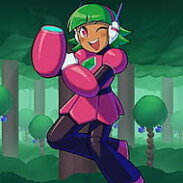
Destructive robots are running rampant, and Nadine, an incomplete prototype android of unknown origin, fights to stop them while searching for her creator. The setup is simple, but it frames every level as a push through robot-filled territory toward answers about who built her. Stages mix platforming, shooting and enemy patterns that test both aim and movement.
Players who grew up on 16-bit action will recognize the structure immediately. Many compare the feel to Sega-era platformers. Many compare the feel to Sega-era platformers and Mega Man-style run-and-gun stages.
Retro action fans will enjoy the tight levels and readable enemy patterns. The pixel art is crisp, and enemies telegraph their attacks clearly enough that mistakes feel like your own.
Building and Swapping a Loadout
Nadine carries a loadout of weapons rather than a single blaster. Each weapon has its own range, damage and rhythm, and certain enemies are much easier with the right tool. Learning which weapon handles which robot is the key progression skill.
The temptation is to stick with the most comfortable gun. That works for the first stretch but fails once mixed enemy groups appear. That works for the first stretch but falls apart once mixed enemy groups appear.
- Keep a fast-firing option for swarms of small robots.
- Switch to heavier weapons for armored targets.
- Use close-range tools when enemies crowd platforms.
- Swap before engaging rather than mid-panic.
Sliding, Dashing and Melee Pressure
Movement is as important as shooting. Sliding lets Nadine slip under projectiles and close distance quickly, and some players describe the melee options as giving a Rockman-style feel without turning into a pure sword game. Combining slides with weapon swaps creates a flowing rhythm once it clicks.
Sliding is not a guaranteed escape, though. Community clips joke about slides that end directly in danger. Community clips joke about slides that carry Nadine straight into danger.
Timing is everything. Slide too early and you land in a projectile path; slide too late and you take the hit anyway.
Keyboard Versus Controller
Controls are configurable, but players consistently report that keyboard play makes the game noticeably harder. Weapon swapping, sliding and jumping at the same time is more comfortable on a controller. If the difficulty feels unfair, switching input is often the fix.
Many players learn this the hard way after several frustrating attempts. Several commenters admit they made the game far harder for themselves before switching.
Remapping keys helps keyboard users, but the community recommendation is clear: use a controller if you can. The game feels designed around one.
How the Stages Build Difficulty
Early stages introduce one or two enemy types at a time, giving you space to learn weapons. As you progress, enemies combine, platforms narrow and patterns overlap. By the later stages, every encounter asks you to swap weapons and move at once.
- Learn each weapon on the early stages where enemies are simple.
- Practice sliding under projectiles before enemy density rises.
- Plan weapon swaps for mixed enemy groups in later stages.
Players who rush through the opening stages often struggle later, because they never learned which tool fits which robot. Going back to practice weapon swaps on easy enemies is the usual fix.
Where Prototype N Leaves Players Wanting More
The most common complaint is simply wanting more content. Players praise the feel and polish but want longer stretches and more of Nadine’s story. Development has been long, and the community jokes about the wait.
Despite that, enthusiasm stays high, with many calling it one of the best platformers on its hosting page. Players regularly ask when more of Nadine’s story will arrive.
A few questions show up in almost every comment thread. Three appear most often:
- Who is Nadine? Nadine is the prototype android protagonist, an incomplete robot of unknown origin. She fights destructive robots while searching for her creator.
- Is keyboard or controller better? Controller is strongly recommended by players. Keyboard play makes weapon swapping and sliding harder to combine.
- How do you handle mixed enemy groups? Swap Nadine’s weapons before engaging and use slides to reposition. Matching the weapon to the robot type is the main strategy.
Prototype N rewards players who learn Nadine’s full loadout, slide with purpose and swap weapons before the robot swarms close in. Pick up a controller, and the stages open up quickly.