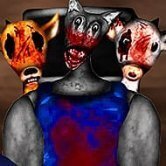
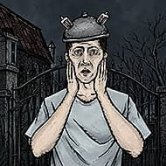
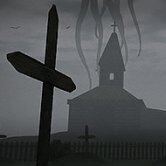
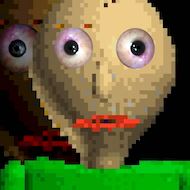
You hear a knock, then a voice that is almost Mother Goat’s but a little too low, and you have only a moment to decide whether to trust it in The Wolf and the Seven Little Goats (Analog Horror). Seven small goats are alone in a quiet house, and the only thing standing between them and the Wolf is their ability to listen.
The Voice at the Door in The Wolf and the Seven Little Goats (Analog Horror)
The story follows the old Grimm shape, only drained of comfort. Mother Goat leaves her seven kids at home to find food, warns them about the Big Bad Wolf, and tells them to keep the door shut. The game builds nearly all of its tension from that warning, because every sound after it is a test of what the goats actually heard.
The Wolf tries the classic trick and imitates Mother Goat, claiming she has come home. The goats see through it almost at once, since the voice does not match hers. That failed disguise is the most satisfying beat, because it proves the children listened before the story takes the choice away from them.
Anyone expecting the original rescue ending will be disappointed. That bleak turn is the main thing players argue about, and it is also what the story is built around.
Mother Goat, the Apple and Where Everything Goes Wrong
Away from the house, Mother Goat finds an apple, wanders on, and runs straight into the Wolf. The chase that follows is where the analog horror style bites hardest, because the Wolf closes the distance by teleporting, glitching from one spot to the next the way a damaged tape skips frames. Static and sudden cuts do the work that jump scares usually do.
Fans place this chapter as most likely a prequel to Where Have You Been?, part of a larger series where the same Wolf hunts Little Red Riding Hood and the Three Little Pigs. Once you know that, the ending hangs over every scene, because the goats are doomed by canon before the knock even sounds.
Horror fans who prefer slow dread over action will find the best moments in the quiet. Those moments arrive long before the Wolf reaches the window.
Couches, Crates and the Spirit Form
When the door will not open, the Wolf forces his way in through the window, and the goats scramble to hide. The couch is the first hiding place and the first one the Wolf checks, which tells you how little cover a small house offers.
The crate hides a few goats at once, which feels clever until you realize that grouping them only makes them easier to find together. Small spaces feel safe right up until the Wolf checks them.
The spirit form is the Wolf’s shapeshifted state, and once he uses it hiding stops feeling like a real strategy. By then the game has made its point: listening bought the goats a minute, and nothing more.
Questions About The Wolf and the Seven Little Goats (Analog Horror)
Does it connect to the Little Red Riding Hood chapter?
Yes, most likely as a prequel to Where Have You Been?, with the same Wolf and the same bleak tone. Mother Goat leaves, the Wolf arrives, and the later chapters show what he has already become.
How does the Wolf actually get inside?
He first tries to pass as Mother Goat by imitating her voice at the door. When the goats refuse to open it, he breaks through the window instead, and the hiding begins.
Can the seven goats win?
No, this telling does not offer the rescue from the Grimm tale. The Wolf is not ready to be hurt yet, and the story is built to show that the seven goats never had a chance.
The Wolf and the Seven Little Goats (Analog Horror) is a short, cold retelling that trades the fairy tale’s rescue for a Wolf who teleports, imitates Mother Goat, and breaks through the window. Anyone who has heard that low, wrong voice at the door will keep listening for it long after the static fades.