In Shift At Midnight you start each shift behind the counter of an isolated roadside gas station with a sales quota to hit, shelves to stock, a delivery on the way and a line of customers who may or may not be human, which matters because every one of those jobs competes for the same few minutes. Nothing in the job description mentions monsters, but every shift ends up being about them.
| Genre |
Co-op detective horror with store management |
| Players |
Solo or a small co-op crew |
| Campaign |
13 randomly generated shifts |
| Endings |
Three |
The Counter Routine Behind Shift At Midnight
The first hour of play feels like a store sim. You restock shelves, accept deliveries, sweep up messes and ring up purchases so the nightly quota stays on track. Every shift is randomly generated, so the order of customers and the timing of deliveries change each time. The routine looks mundane, but it is deliberately designed to keep your hands busy while the real threat walks through the door.
That split attention is the whole hook. You cannot interrogate everyone carefully if the shelves are empty and the quota is slipping.
Beginners usually overcommit to one side. Some players stock perfectly and wave every customer through, while others grill everyone and fail the quota. The sweet spot is quick restocks between customers and careful checks only for anyone who raises a flag.
Five Questions, One ID and a Computer Check
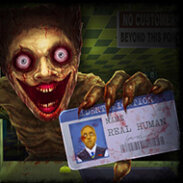
Each customer can be asked up to 5 questions, and you can examine their ID and cross-check details in the station computer. Doppelgangers slip up in small ways: a detail on the ID that does not match the system, an answer that contradicts their own story, or behavior that feels slightly off. The game rarely hands you a single obvious tell, so you learn to stack small doubts.
Community players call these suspects doppels, and the most useful habit is comparing the ID photo and details against the computer before asking anything. That way your five questions go toward confirming a hunch rather than fishing blindly.
Detective-minded players will love this part. Every customer is a tiny puzzle, and the satisfaction of catching a doppel on a mismatched detail is the high point of each shift.
When a Doppelganger Walks Out the Door
Letting a doppelganger leave is not the end of the shift; it is the start of the bad half. The creature returns later as a monster, and the game shifts from investigation to survival. You barricade doors, set traps and look for places to hide until the threat passes or the shift ends.
If you do decide to shoot a suspected doppel, you also have to clean up afterward. Shooting an innocent customer is a mistake you cannot undo.
This two-phase structure is what players remember. The quiet store suddenly goes dark, the counter becomes a defensive position, and every sound from the parking lot feels like a warning.
Co-op Roles and Proximity Chat Chaos
With friends, Shift At Midnight becomes something much louder. One player can run the register while another stocks and a third watches suspicious customers, and proximity chat means you can only hear teammates who are nearby. Arguments about whether someone is a doppel turn into hushed debates behind the counter.
Co-op crews who like assigning roles will get the most out of the game. Splitting tasks takes enough pressure off that interrogations become thorough rather than rushed.
Solo play is noticeably harder. You juggle every job alone, and the moments when a delivery arrives during a suspicious conversation can feel overwhelming.
Shift 13 and the Three Endings
The campaign runs across 13 shifts, and the final choices after Shift 13 determine which of the three endings you see. Players often finish once and immediately start a new run to see the other outcomes. Because shifts are randomized, repeat runs still feel different.
Reaching Shift 13 also takes consistency. A single escaped doppel late in the run can turn a clean campaign into a desperate scramble.
The ending choices are discussed heavily in community threads, and the best advice is to save your decision-making energy for that final shift rather than burning out in the middle stretch. Players who arrive at that last shift exhausted tend to make choices they regret.
What Shift At Midnight Gets Criticized For
The most common complaint is that some doppelganger reveals feel arbitrary. When the tells are subtle, players occasionally feel they lost a run to a coin flip rather than poor investigation. Others argue that is the point, since paranoia is part of the horror.
Solo balance is another debate. Many players feel the game is clearly tuned for groups, and lone players can find the multitasking more stressful than scary.
Newcomers and veterans alike keep circling the same topics. Three questions come up in almost every discussion:
- How do you spot a doppelganger reliably? Start with the ID and the computer cross-check, then use your 5 questions to test any mismatch you find. Watching for odd behavior at the counter adds a final layer of evidence before you decide.
- How do you get all three endings? Reach the end of Shift 13 and make different final choices on separate runs. Since each shift is randomly generated, every new attempt plays out differently on the way there.
- Can you play solo? Yes, but you handle stocking, deliveries, cleaning and interrogations alone. Most players find the game easier and more fun with a co-op crew sharing the workload.
Shift At Midnight rewards crews who balance the quota with careful ID checks, because one doppelganger who slips out of the store turns a quiet night of restocking into a fight for survival behind barricaded doors. Keep the shelves full and the checks sharp, and the doors stay open for customers instead of creatures.