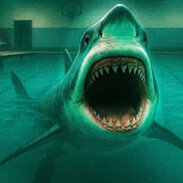
You sprint off the starting line with a pack of other minnows, cut hard toward the far wall, and a shark who was drifting near the center suddenly lunges into your lane. In Sharks and Minnows that single tag flips you from prey to predator, and the round you were trying to survive becomes a round you now have to win from the other side.
| Genre |
Tag and chase party game |
| Roles |
Sharks and minnows |
| Round structure |
Repeated crossings between two safe zones |
| Win condition |
Last minnow standing, or sharks tag everyone |
Crossing the Tank: How a Round of Sharks and Minnows Flows
Every round starts with the minnows lined up on one safe side and one or two sharks waiting in the open middle. When the crossing begins, the minnows have to reach the opposite safe zone, and any minnow who gets touched along the way joins the sharks for the rest of the match. Survivors line up again, the next crossing starts, and the cycle repeats until only one minnow is left untagged. Because tagged players switch sides instead of sitting out, nobody spends the match watching from the sidelines.
That snowball is the whole game in miniature: early crossings feel roomy, late ones feel like running through a closing door.
The safe zones are the only place a minnow can breathe. Standing on the line between crossings gives you a moment to read where the sharks have parked themselves, and that read is worth more than raw speed. Players who rush the instant a crossing opens tend to run straight into whichever shark the crowd is already funneling toward.
Reading the Middle Before You Run
Beginners make the same mistake in almost every lobby: they all pick the shortest straight line. Sharks know it, so they hold the center lane and let the crowd come to them. The minnows who last longest take a wider arc along the side walls, let the pack absorb the first lunge, and only then commit to the gap that opened up behind it.
Community shorthand helps here. A juke is a fake step one way followed by a hard cut the other, and it works far better against a single shark than against a wall of three. Wall-running means sticking to the map edge so a shark can only approach from one side. Once four or five sharks are on the field, the safest juke is often no juke at all, just patient timing at the line.
Competitive players who treat each crossing like a puzzle will enjoy reading shark positions more than the sprint itself. Patience is the skill that separates a fifth-crossing survivor from someone tagged on crossing two.
Playing Shark in Sharks and Minnows
Getting tagged is not the end of your match; it is a role change. A lone shark at the start has to pick targets carefully, because chasing one minnow across the whole map lets everyone else stroll past untouched. The better move is to hover near the middle, mirror the crowd’s movement, and only lunge when a minnow is committed to a line it cannot change in time.
Once there are several sharks, coordination wins. Spreading out into a loose net closes lanes, while every shark chasing the same runner leaves the edges wide open. Lobbies where players watch each other’s positions finish crossings noticeably faster.
Casual players who just want quick, silly rounds will find the shark side the most relaxing part of the game, since there is no pressure to survive. The tension belongs entirely to whoever is still a minnow, and sharks get to enjoy watching the net tighten.
The Last-Minnow Standoff
Here is where players argue. When only one or two minnows remain, rounds can turn into a slow standoff, with the survivor refusing to leave the safe line and the sharks clustering just beyond it. Some call that smart play; others call it stalling. Lobbies that run a round timer settle the debate by handing the win to the minnows if anyone is still untagged when time runs out, which pushes the sharks to press instead of wait.
The final crossing is also the moment regulars remember most. The field goes quiet, every shark turns toward the last minnow at once, and a crossing that felt chaotic with a full crowd now feels like one held breath.
Whether that standoff is thrilling or tedious depends a lot on the lobby. Groups that agree on a timer or a crossing limit tend to keep the pace snappy, while lobbies without one can drag the ending out for longer than the rest of the match combined.
Sharks and Minnows Questions From New Players
What happens when a minnow gets tagged?
That minnow becomes a shark immediately and starts chasing from the next crossing. The number of sharks only grows, so every tag makes the remaining crossings harder for the survivors. By the final crossings the middle of the map can hold almost the entire lobby.
How do you survive as the last minnow?
Stay on the safe line until the sharks commit to a spot, then cross along the wall opposite their cluster. A late, wide route beats an early straight one almost every time. If the lobby uses a timer, simply staying untagged until it expires is a legitimate win.
Can the sharks lose a round?
Yes, in lobbies that run a round timer the minnows win if at least one of them is still untagged at zero. That rule is what stops sharks from parking at the safe line forever. It also rewards sharks who spread into a net early instead of waiting for the last minnow to panic.
Sharks and Minnows rewards whoever watches the middle before moving, whether that means timing a wide wall run as the final minnow or spreading the shark net so nobody slips through the center lane on the last crossing. Read the safe line first, and the crossings take care of themselves.