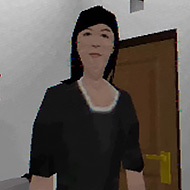
Pikabuu: STOP! has no combat system, no score counter, and almost no traditional gameplay to speak of — just choices, silence, and three names that keep showing up no matter which path you take: Beni, Nadia, and Kaila.
| Genre |
Dark, minimalist visual novel |
| Main Characters |
Beni, Nadia, and Kaila |
| Core Focus |
Emotional storytelling and branching choices |
| Structure |
Narrative chapters unlocked through story progress |
Why Pikabuu: STOP Skips Traditional Gameplay
This is a game that asks players to sit with discomfort rather than solve it. There are no puzzles to figure out and no combat to master; the entire experience is built around dialogue choices and pacing, which is exactly what draws its audience in and exactly what turns other players away within the first chapter. Community discussion around Pikabuu: STOP consistently frames it less as something you play and more as something you sit through, closer to reading a difficult novel than clearing a level. Players sometimes describe that feeling using the term “narrative-first,” a shorthand that’s grown common in visual novel circles for stories built entirely around choice and consequence rather than reflexes.
Its tagline, framed around a home that stops functioning as a safe place, sets the tone before the first choice ever appears on screen. That framing matters because Pikabuu: STOP doesn’t ease players into its subject matter gradually — the very first scene establishes the emotional register the rest of the story stays in, and players who click through the opening screen expecting a slow build often find themselves recalibrating within minutes.
Story-focused players — the ones who care more about character arcs than mechanical systems — tend to be the audience this game was built for, and they’re usually the ones who finish it in a single sitting rather than breaking it into shorter sessions. Players looking for narrative depth over mechanical complexity are drawn in early, but even among that group, reactions to the pacing diverge once the story moves past its opening chapter.
Beni, Nadia, and Kaila
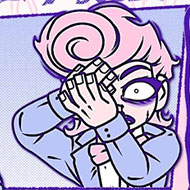
The game keeps its cast small and its focus tight. Beni, Nadia, and Kaila anchor every branch of the story, and the writing leans on subtle shifts in how these three interact rather than dramatic plot twists to build tension. Players who care about narrative consistency across replays tend to track exactly how each character’s attitude changes depending on earlier choices, since Pikabuu: STOP rarely announces those shifts directly — a raised eyebrow in a dialogue portrait or a delayed response line often carries more weight than an explicit statement would.
Empathy-driven responses in dialogue tend to open up scenes that colder, more guarded choices skip entirely, which rewards players willing to slow down instead of clicking through quickly. Once Kaila’s storyline reaches its first major turning point, the game starts tracking earlier choices in ways that aren’t always obvious until a much later scene calls back to them, which is part of why players compare notes so heavily in community threads.
Completionist players — the ones chasing every scene variant rather than a single ending — tend to keep a mental log of which responses they gave Beni and Nadia on a first run, specifically so they can invert those choices on a second pass and see how differently the same conversation plays out. That kind of deliberate contrast-testing has become one of the more common ways longtime players talk about replaying the story.
The Gallery and Replay Value
Once a scene is unlocked, it’s stored in an in-game gallery that players can revisit — a small feature that ends up mattering a lot given how much of the story hides in subtext. Replaying earlier memories after finishing a first run is common practice among players trying to catch details that only make sense in hindsight, and the gallery effectively turns Pikabuu: STOP into something closer to an archive than a one-time read.
Save often at major decision points.
That habit turns a short first playthrough into something closer to a puzzle box, where the emotional payoff comes from connecting scenes rather than optimizing a single linear path. Players who lean on the gallery heavily tend to notice connective tissue between Nadia’s earlier dialogue and Beni’s later choices that a single straight-through playthrough simply doesn’t surface, since the game rarely spells those links out directly.
The save-point habit matters for a second reason too: because Pikabuu: STOP doesn’t offer a chapter-select menu by default, players who skip manual saves near a branching moment often find themselves replaying a much larger chunk of story than they intended just to revisit one gallery scene.
An Honest Look at the Minimalist Style
Not every player responds well to how sparse Pikabuu: STOP is willing to be. The minimalist visual style and lack of branching mechanics beyond dialogue choices leave some players wanting more interactivity, and that criticism shows up regularly in community feedback. It’s a fair complaint — the game trades mechanical depth for narrative intimacy on purpose, and that trade doesn’t work for everyone.
The lightweight footprint that makes the game easy to install on modest hardware is the same design choice some players hold against it, since a run of roughly two to three hours can feel short compared to the emotional weight the story asks players to carry. That gap between runtime and impact is one of the most common points of debate in reviews, with some players arguing the brevity is exactly what keeps the story from overstaying its welcome, and others wishing certain scenes with Nadia or Kaila had more room to breathe before the game moved on.
Players newer to narrative-first games sometimes misjudge the pacing early on, expecting a slow ramp into darker material the way longer visual novels typically structure their first act; Pikabuu: STOP instead front-loads its tension, which catches first-time players off guard more often than returning fans of the genre.
Who are Beni, Nadia, and Kaila in Pikabuu: STOP?
They’re the three central figures the story revolves around, with the narrative built almost entirely around the shifting dynamics between them across branching dialogue choices. Beni functions as the emotional anchor most players end up watching most closely, while Nadia and Kaila each pull the story in different directions depending on how early scenes are handled.
Does Pikabuu: STOP have multiple endings?
Yes, outcomes shift based on the player’s choices throughout, with empathy-driven responses generally unlocking additional scenes and story branches not visible on a colder playthrough. Players comparing endings in community threads often point to Kaila’s arc specifically as the one most sensitive to earlier dialogue choices.
Is Pikabuu: STOP appropriate for casual players?
It depends on tolerance for heavy subject matter — the game is intentionally emotionally intense, and players looking for light, casual pacing may find it overwhelming rather than relaxing. It’s better suited to sessions where a player can give the story full attention rather than treating it as background entertainment.
Whether Beni’s choices lead somewhere hopeful or somewhere much darker, Pikabuu: STOP earns its reputation less through gameplay mechanics and more through how long its quietest scenes with Nadia and Kaila stay with players after the screen goes dark.