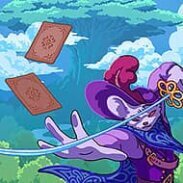
The strum line in Eye Catching FNF does not behave the way most rhythm-game beginners expect the first time arrows start climbing toward it. This is the B-Sides Remixes pack built on the original six weeks of Friday Night Funkin, with every track rearranged into a faster, denser version of a song players already know. Boyfriend still has to out-sing whoever is standing across the stage from him, but the charts underneath those familiar faces have been rebuilt almost from scratch.
| Genre |
Rhythm / music sing-off |
| Platform |
Browser (HTML5) |
| Core Mechanic |
Timed arrow-note hits against an opponent across remixed weeks |
| Content Pack |
B-Sides Remixes, covering the original Weeks 1 through 6 |
What Eye Catching FNF Actually Asks You to Do
The note highway is the scrolling lane of arrows climbing toward the strum line at the top of the screen, and hitting each arrow on beat is the entire input model. The judgment tiers rank every hit from a clean Sick down through Good and Bad, and missing outright drains the health bar toward the opponent’s side. The health bar itself is the actual win condition, not a numeric score.
The song-select screen is where most players spend their time with Eye Catching FNF, since it lets you jump into any remixed track without replaying the story order first. Story mode groups the same songs into their original week structure instead, which matters more to players chasing a clean run.
None of that is unique to the remix pack on its own, but the denser charts punish hesitation far more than the base game does. A player who survives Bopeebo on autopilot in the original will still get caught out the first time B-Sides fills a gap that used to be empty.
Boyfriend, Girlfriend, and the Sing-Off Format
Every track is framed as a sing-off: Boyfriend faces an opponent while Girlfriend bops along in the background, and the structure never breaks from that call-and-response shape. The opponent sings a phrase first as notes flash without player input, and the same phrase repeats on Boyfriend’s side as arrows you actually hit.
That call-and-response is what keeps charts learnable at faster tempos, since the opponent previews the pattern half a bar before you’re asked to play it back. Genre veterans lean on that preview constantly; newcomers tend to ignore it at first, treating every arrow as a surprise.
It’s a simple structural trick, but it’s why remixed charts still feel readable even once note density climbs well past what the original six weeks ever asked for.
How Eye Catching FNF Reworks the Original Six Weeks
The pack covers 18 remixed tracks spread across the same six weeks as the base game, with the same opponents in the same order, just new instrumentation and busier charts underneath. Nothing about the story or cast changes; the pitch is hearing familiar songs rearranged into something sharper.
What changes most is pacing. Sections that were sparse in the original charts, giving players a breather between phrases, often get filled in here, so a song that felt manageable at base difficulty can suddenly demand sustained focus.
Whether that’s an improvement is genuinely split opinion. Some players treat the denser charts as proof the originals had room to escalate; others argue a few sections cross from challenging into cluttered, closer to note-spam than a rhythm to learn.
Daddy Dearest, Monster, and the Early Difficulty Curve
Week one puts Boyfriend against Daddy Dearest across Bopeebo, Fresh, and Dad Battle, and in Eye Catching FNF these three tracks run noticeably faster than most players remember from the base game. Bopeebo loses the slow, forgiving pacing it’s known for and becomes an early gate that filters out anyone still learning to read the note highway.
Week two brings Skid and Pump, the pumpkin-headed duo, through Spookeez and South before Daddy Dearest reappears in his corrupted Monster form for the closing track. Once Monster’s chart kicks in, the rhythm shifts from playful to genuinely tense.
By the time Monster ends, most beginners have learned the pack’s core lesson: nothing here plays exactly like the version they remember, and assuming otherwise is the fastest way to lose the health bar.
Pico, Mommy Mearest, and the Mid-Pack Wall
Pico shows up for week three across Pico, Philly Nice, and Blammed, and this stretch is where the remix pack’s speed starts separating casual players from people chasing a full clear. The charts lean into rapid-fire single note bursts rather than long held sequences.
Week four swaps in Mommy Mearest for Satin Panties, High, and M.I.L.F, and the tone shifts toward syncopated, off-beat patterns that don’t line up as neatly with the music as earlier weeks did. Players who breezed through week one start missing notes they’d normally hit clean.
Completionists chasing a full-combo run across every week tend to name this stretch as the real difficulty wall in Eye Catching FNF, more so than the flashier songs later in the pack.
Cocoa, Winter Horrorland, and the Late Difficulty Spike
Week five is framed around Girlfriend’s parents and covers Cocoa, Eggnog, and Winter Horrorland, widely treated as the hardest stretch in the whole pack. Cocoa and Eggnog keep a holiday theme and a relatively normal pace.
Winter Horrorland brings Monster back for a second appearance with a chart dense enough that it’s often where a clear run ends early. What makes it stand out isn’t just speed, it’s the visual noise layered on top of the notes, with background animation timed to distract right as the pattern gets busiest.
Players who’ve cleared it describe the moment the screen shakes and the note stream doesn’t let up to compensate, a detail that only registers once you’ve actually sat through the song rather than watched a clip of it.
Senpai, Spirit, and the Closing Stretch
Week six closes the pack with Senpai, Roses, and Thorns, shifting the visual tone toward the anime-influenced art style the base game’s sixth week is known for. Senpai’s chart eases players back in slightly after Winter Horrorland.
Thorns ramps the difficulty back up as Senpai’s corrupted Spirit form takes over for the final song, layering rapid alternating arrows with off-tempo hits that only start to feel readable after multiple attempts.
Reaching the end of Thorns without missing is the kind of clear players screenshot and share, since it means surviving every difficulty spike Eye Catching FNF built up to that point.
What is actually different about the songs compared to the base game?
The story, characters, and week order all stay the same, but every one of the 18 tracks is remixed with new instrumentation and a denser chart underneath. Songs like Bopeebo and Cocoa keep their melodies recognizable while adding far more notes per phrase than the original arrangements ever did.
Which week is considered the hardest in the B-Sides pack?
Week five, built around Cocoa, Eggnog, and Winter Horrorland, is the stretch most players point to first, largely because of Winter Horrorland’s note density and distracting background animation. Week four’s Mommy Mearest songs are the other stretch commonly named as a wall.
Do the opponents change or just the music in this pack?
The opponents stay exactly the same across all six weeks, from Daddy Dearest through Senpai’s Spirit form, since the pack only reworks the audio and charting rather than the story or cast. The one visual shift, Monster and Spirit’s corrupted appearances, was already part of the base game.
Eye Catching FNF works because it trusts players to already know these songs, then dares them to hit every arrow anyway once Bopeebo speeds up, Monster’s syncopation kicks in, and Winter Horrorland throws its screen-shaking chart at whatever health bar is left.