Shroom and Gloom looks like a cozy first-person dungeon crawl until the first mushroom enemy corners you, and then it plays like a card-driven survival puzzle where every decision is drawn from a deck instead of typed in as a command. That gap between appearance and mechanics is the first thing new players notice, and it is also what keeps the fungal-punk setting from feeling like a gimmick.
| Genre |
First-person roguelike deckbuilder |
| Perspective |
First-person |
| Session Length |
Roughly 30-60 minutes per run |
Two Decks, One Dungeon
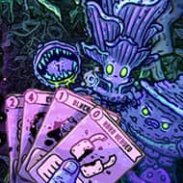
The defining structural choice in Shroom and Gloom is splitting player options into a combat deck and an Explore deck rather than one unified card pool. The combat deck governs how you fight the mushroom-people you encounter, while the Explore deck functions as your toolkit for the dungeon itself, covering things like maps, lockpicks, and campfires.
Because every decision, combat or otherwise, is resolved through a card, the game removes free-form exploration inputs entirely. Early players sometimes expect to walk up and interact with a locked door directly, only to realize the lockpick card in the Explore deck is the only legitimate way through, which is a common early stumbling block reported in community comments.
Stab, Season, Skewer, Roast, Eat
Combat cards in Shroom and Gloom cover a surprisingly wide range of actions beyond basic damage, including seasoning and roasting enemies before finishing them off by eating them outright. This is not just flavor text; cooking-themed cards interact with each other, and stacking the right sequence of cards against a single enemy produces noticeably better results than random card play.
The soup mechanic pushes this even further by letting players combine multiple defeated foes into a single pot for a stronger combined effect. It is one of the most talked-about systems in the game specifically because it rewards planning multiple turns ahead rather than reacting card by card, which separates confident deckbuilders from players still learning the loop.
What Beginners Consistently Get Wrong
New players tend to hoard combat cards defensively instead of spending them proactively, which backfires once a room fills with multiple mushroom enemies at once. The Explore deck gets neglected even more often, since its non-combat cards look less exciting on paper, but running dry on lockpicks or campfires mid-dungeon is a common way early runs collapse.
Community discussion around the game frequently points to this exact tension between hoarding and spending as the real skill curve, more so than any individual boss fight. Players who adjust their card economy early tend to describe noticeably smoother runs by their second or third attempt.
An Honest Look at the Rough Edges
Shroom and Gloom is still an evolving prototype rather than a finished release, and the community is upfront about that. Some sessions feel a little thin in the middle once the initial novelty of the cooking-themed combat wears off, and several players have openly asked for more enemy variety before the eventual full release, a request the developers have acknowledged is on their radar.
None of that has slowed the game’s word-of-mouth growth, and by the time a run ends with a pot of soup made from three defeated mushroom-people, Shroom and Gloom has usually made its case: a first-person dungeon crawler where the cards do the fighting is a stranger, funnier idea than it sounds, and it mostly earns the laugh.