What happens when the photo you just printed shows something that wasn’t standing in front of the camera? Photomaly builds its entire horror premise around that single unsettling question, wrapping it inside the daily grind of running a portrait studio you never wanted to inherit.
| Genre |
PSX-style first-person horror job simulator |
| Setting |
A photo studio inherited from the protagonist’s father |
| Campaign Length |
Story route reaches its ending decision on Day 6 |
| Endings |
Family Matters and Reset Protocol |
Inheriting the Studio
Photomaly opens with a premise that’s mundane on the surface: you’ve taken over your father’s photography business, and now it’s yours to run. Rent doesn’t pay itself, and the first day or two plays almost like a straightforward job sim, walking customers through poses and printing their orders without much drama. That calm is deliberate. Photomaly is built to lull you into a work routine before quietly breaking it.
By the time strange requests start showing up alongside the ordinary passport photo orders, the studio no longer feels like a simple family business.
Players who go in expecting constant scares often misjudge the pacing early on, since much of the tension comes from routine tasks that feel just slightly wrong rather than obvious threats.
Camera, USB, and Film Roll: Three Ways to Process a Photo
One of the more distinctive systems here is how many ways there are to actually get a photo developed. The studio supports processing through a digital camera workflow, a USB transfer route, and old-fashioned film roll development, and each method changes how you interact with the printing counter afterward. Community discussion frequently points to this variety as one of Photomaly’s stronger design choices, since it keeps the day-to-day loop from feeling identical across every shift.
Film Roll processing in particular tends to slow the pace down further, which some players use deliberately to study a photo more carefully before deciding whether to flag it.
Comparing the Photo Against the Client
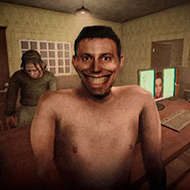
The core tension mechanic asks you to compare a freshly developed print against the actual customer standing in your studio and the background behind them. Anomalies range from subtle facial distortions to extra limbs to entities that appear only in the developed image and nowhere in the room itself. Flagging a clean photo wastes time and money; missing a genuine anomaly and handing it over anyway lets supernatural distortion build up, and that buildup is explicitly framed as dangerous to the player character.
Anomaly detection — the act of scanning a print against reality before deciding whether to reject it — is the single mechanic most reviewers describe as the game’s strongest hook.
Newer players consistently rush this step early on, treating it as a formality rather than the actual core challenge, which tends to be the most common cause of early failures.
When the Backrooms Show Up
Partway through the campaign, Photomaly shifts gears by pulling players into a Backrooms-style sequence that breaks from the studio entirely. It’s one of the more divisive stretches in the whole game — some reviewers feel it disrupts the horror pacing that the job-sim loop built up so carefully, particularly during chase segments where you have to keep a monster in view while navigating a small, maze-like floor riddled with pits. Others find the shift a welcome change of scenery once the studio routine starts feeling too familiar.
Either way, it’s the section players bring up most often when debating whether Photomaly’s pacing holds together across a full run.
Security Cameras and the Red Room
Between customer visits, Photomaly borrows a familiar mechanic from other horror titles by giving players access to security camera feeds, letting you monitor the studio for movement or intrusions between shifts much the way older survival-horror titles handle downtime. A separate red room space adds another layer to the development process, tying directly into how film gets processed and, eventually, into the story’s darker implications.
Players who enjoy methodically checking every camera angle before returning to the counter tend to catch early warning signs that customer-focused players miss entirely.
Decorating the Studio Between Shifts
When business slows down, Photomaly lets you personalize the space — hanging favorite prints on the wall or designing a custom wallpaper for the studio’s computer. It’s a small system, but reviewers consistently mention it as a nice contrast to the dread building elsewhere, giving the space a lived-in feeling that makes later disruptions land harder.
Profits earned from completed orders fund studio upgrades, tying the decorating loop directly back into the game’s core economy rather than treating it as a separate distraction.
Reaching Family Matters or Reset Protocol
By Day 6, the story funnels toward one of two documented endings. Family Matters leans into the studio’s personal history and what the protagonist chooses to do with what they’ve learned about it, while Reset Protocol closes things out on a colder, more procedural note. Community guides treat these two as the confirmed outcomes, though the ongoing addition of endless-mode content means the full scope of the game’s branching is still being mapped out by players.
Achievement hunters tend to replay the full week multiple times specifically to lock in both endings rather than settling for whichever one they reach first.
What Players Debate About Photomaly
Beyond the Backrooms pacing question, the most common critique involves jump scare sound design in a handful of scenes, which some reviewers describe as too quiet to land the impact the visuals are clearly going for. That criticism sits alongside overwhelmingly positive reception overall, with the game holding a 90% approval rating across nearly a thousand user reviews shortly after launch.
Even critics of specific sequences tend to agree the core photography loop — checking a print against the client in front of you — is strong enough to carry the game through its rougher stretches.
Whether you land on Family Matters or Reset Protocol, Photomaly’s real trick is making an ordinary photo counter feel unsafe long before anything in the Backrooms ever shows up, one anomaly-flagged print at a time.