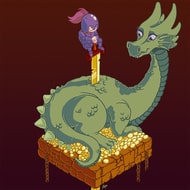
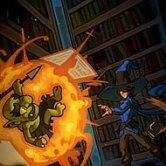
Finals Week looks like a goofy 90s school spoof, but it plays like a communication puzzle where every whisper has a price. Up to four students walk into a classroom without having opened a single textbook, and the Professor patrols the rows listening for anything that sounds like teamwork. Twelve exams stand between your group and graduation, and the answers only reach your desk if you move information faster than the Professor can catch it.
| Genre |
Co-op cheating comedy |
| Players |
1 to 4 |
| Exams |
12 |
| Setting |
90s-style school |
| Platform |
PC |
Proximity Chat Is the Real Exam in Finals Week
The core mechanic is voice that fades with distance. A whisper to the classmate at the next desk is lost the moment you cross the room, while a conversation that runs too loud carries straight to the Professor. That turns talking into a resource you spend carefully, and the game rewards groups who treat their own microphones like a limited supply. Beginners usually blurt every answer the second they see it, which is exactly how the first eraser gets thrown, and the Professor throws erasers with worrying accuracy.
Early in the game the exams forgive sloppy habits, so the lesson sinks in slowly. By the time you reach the later exams, a plan that depends on one loud voice collapses, because the Professor grows more suspicious and the punishments grow stranger. Groups that survive settle into a routine where one person reads, one person relays, and nobody speaks above a murmur.
Social players who love being the group’s voice tend to end up reading answers aloud, while quieter classmates take over the relay.
Walkie-Talkies, Binoculars and the Rest of the Cheating Kit
Every channel trades range for risk. Walkie-talkies ignore proximity entirely and let a friend feed answers from across the room, but the device itself can catch a suspicious eye. Cellphone texts are silent, yet the screen is visible. Paper notes and throwable objects move information physically, and binoculars let you read answers from a distance without making a sound. Choosing between them under pressure is the real skill, which is why each attempt tends to produce a different story.
Then there is the pen. You can write answers on a classmate’s face, which means the right information and the wrong person’s impulse control produce very different outcomes. The tranquilizer blowgun pen handles the edge case where a classmate who knows the answers refuses to share, and chaos-minded players will treat it as a first resort while careful ones save it for the exam where nothing else works.
No tool is safe on its own, and that is the whole point.
What Getting Caught Costs in Finals Week
Get caught and the Professor escalates in stages: first a gag, then being tied up, and at peak suspicion a Cone of Shame. None of it removes you from the exam. This fail-forward design is what separates the game from social-deduction party titles built around elimination, because nobody sits out and nobody gets voted off. A gagged friend simply has to find another way to contribute, which is where much of the comedy comes from.
Between exams the group retreats to a hallway hub where you can shoot hoops, plan the next test and unlock outfits, hairstyles and color options. A typical session follows a loop like this:
- Scout the room. Agree which channel carries answers before the exam starts.
- Cheat quietly. Pass answers by whisper, walkie-talkie, text or note.
- Absorb the damage. If the Professor catches someone, the gag or ropes come out and the exam continues.
- Adjust and repeat. Change the approach in the hallway hub, then take the next exam.
The loop has an honest weak spot: the game is built around talking, so a group that will not use microphones loses the best part. A single player can attempt the exams alone, but the communication tools only really shine with friends. Groups that want a clear finish line will appreciate that twelve exams work like a graduation, and that every pass unlocks something new in the hallway.
Answers Before Your First Exam
How many players can sit the exams together?
Up to four students can take part, and a single player can attempt the exams alone. The communication tools, from proximity chat to the walkie-talkie, are designed around groups, so a solo run misses most of what Finals Week does best. There are twelve exams in total whatever the party size.
What happens when the Professor catches you?
The Professor answers with escalating restraints: a gag that limits your voice, ropes that limit your movement and finally the Cone of Shame. You stay in the exam the whole time, handicapped rather than removed. Teammates still have to cover for you, so a caught player turns into a problem the rest of the group must solve while the exam continues.
Why does proximity chat matter so much?
Voice volume depends on in-game distance, so a whisper at the next desk stays private while a shout reaches the Professor. Walkie-talkies, cellphone texts and paper notes each give you a different balance of range and risk. Learning which channel suits which moment is the central skill of every exam.
Finals Week works best when your group treats every whisper as a decision, because the Professor never stops patrolling and the Cone of Shame is always one loud mistake away. Pick your channel, trust your relay, and let the hallway hoops be your reward for surviving each exam.