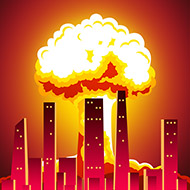
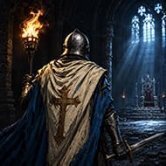
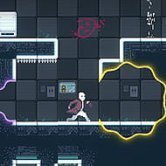
In Deferral you start on day one in a ninth-floor flat with a computer to work at, pills to take, and a stairwell that a war cult’s men climb every evening, which matters because the whole week is organized around who they come for.
| Genre |
First-person story horror with tank combat |
| Inspiration |
Based on H. G. Wells’s The War of the Worlds |
| Structure |
Seven days, with a daytime flat and a night mission in a tank |
| Night missions |
About half an hour each |
| Co-op |
Three tank seats: commander, gunner, driver |
| Platform |
PC (Windows) |
| Content |
War violence, explosions, gunfire, sudden loud sounds, flashing lights |
Seven Days in a Ninth-Floor Flat
Days belong to the civilian. You explore the building, work at the computer for pay, go out for pills, and talk to neighbours, all while a cult that runs the country decides who disappears next. The pills keep you sane, and some of the money you earn goes to whatever the cult demands.
The neighbours matter more than the mechanics suggest. They are dramatic characters built on real people and shown at their most vulnerable, and you get to know them before they are taken, which is what makes each evening on the stairs land. Players who love slow, character-driven horror will find the days are the heart of the story.
The story arrives through dialogues, cutscenes, a world that changes every day, and your parents writing to you in the phone’s messenger. Early in the week the flat feels like a routine, but by the time day six arrives the building you learned on day one has changed around you.
The Knock at the Door in Deferral
Every evening the cult’s men come up the stairs for someone, and when the knock reaches your door you choose to pay, refuse, or fight. That single decision is the pressure point of the daytime half, and it is why the flat reads as everyday horror rather than monster horror.
Going along with the cult is exactly how ordinary people become accomplices, and the game keeps that theme alive when you move into the tank. The story is told from both sides of the war: a civilian who can neither fight it nor leave it, and a commander who does as he is told.
The game lists war violence, explosions, gunfire, sudden loud sounds, and flashing lights in its content notes, while the country, the armies, and every emblem are fictional. Players sensitive to sound or screen flashes should read those notes first, because the horror here is meant to press on real phobias rather than stay abstract.
Giving Orders from the Commander’s Seat
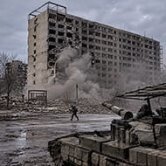
After the nightmares you are somewhere else: the commander’s seat of a tank, beside the tripods, with trench fields, a burning city, and a dam that fills the sky outside. Each night is a mission of about half an hour, so the week settles into a rhythm of daytime dread and night combat.
You do not drive and shoot alone. One crew answers to you: the driver drives, the gunner lays and fires, and the autoloader loads on its own count. Your tools are the thermal sight, the roof machine gun, the drone radar, and the radio, and when something fails you fix it by hand, whether that means starting the engine, pulling a broken track back together, or changing the machine gun’s box.
Beginners tend to treat the tank as a shooter and forget that command is the job. Players who enjoy crew-based tank simulators will feel at home, since the work is giving clear orders and keeping the machine alive long enough to finish the mission.
Tripods, Crew Quirks, and What Still Feels Rough in Deferral
The tripods are what make the story work as a take on The War of the Worlds: the cult’s army fights beside them, and in the tank you fight beside both. That alliance is the uncomfortable center of the night missions, because the machines that terrify the civilian by day become your allies by night.
The game is also still a demo, and it shows in places. The demo has so far covered days one, two, and six, the morning of day seven, and the first two nights in the tank, so the full seven-day arc is not yet playable. Crew members who die slow right down and effectively become zombies, with a changed voice and an empty-headed gunner, and a resupply station is meant to heal them. There is also a known trigger bug that can force you to back up until a resupply station appears.
Recent demo updates have leaned heavily toward the tank side, with a worn interior, mud and craters, and a faster large battle of a dozen tanks and fifty men a side. So is Deferral a horror game or a tank game? Right now it is both, and the balance between the story and the sandbox is the question players keep returning to.
Co-op, the Vehicle Designer, and Dynamic Campaign
Co-op gives the tank three seats: commander, gunner, and driver. Seats nobody takes go to an AI crew that obeys the commander, so a solo player or a pair is never short-handed. Planning happens on a map of New Belgrade, where you set your tank, your platoon, opposing armour and infantry, orders, the hour, and the weather before you take the seat and fight it.
The vehicle designer reads any tank as built, stock or your own, and dresses it with wear to match. Newer machines include a tracked IFV with a 30 mm cannon and a wheeled APC with fitted troop compartments you can sit in. Tinkerers get a lot out of this, since you can place periscope heads and crew stations yourself and see from where you put the eyes.
Dynamic Campaign pushes things further: an endless war over the whole city, played through the co-op room, where both sides plan operations, drive in columns with infantry aboard, lay ambushes, and assault. Squads take windows, storm houses, and blow through walls to clear rooms, so supporting your infantry with tank fire matters as much as hitting armour.
Deferral is at its best when the stairwell and the commander’s seat feel like two halves of the same argument about complicity. Whether you are deciding how to answer the knock on day six or calling a gunner onto a target in the streets of New Belgrade, the question stays the same: what will you do when you are told what to do?