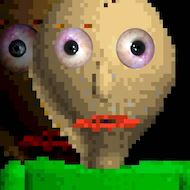
In Not My Dad you start with ordinary household routines: eat, brush your teeth, do homework, and get ready for bed. Dad is present in the same home, but his behavior is strange enough that the simple routine becomes a way of measuring how much you can do without drawing his attention. The game is a first-person psychological horror story built around domestic tasks, investigation, and the growing suspicion that something is wrong with the people around you.
| Genre |
First-person psychological horror |
| Platform |
PC |
| Demo length |
About 10–15 minutes |
| Core mechanic |
Complete household tasks while observing suspicious behavior |
Not My Dad and the Household Routine
The demo begins without the kind of elaborate inventory system found in many horror games. Instead, ordinary actions provide the structure: eating, brushing your teeth, doing homework, and preparing for bed. That familiarity matters because the game wants you to notice when something normal stops feeling normal rather than teaching you a complicated control scheme.
The most common beginner mistake is treating every task as a checklist and ignoring Dad’s presence. The household routine is also the way the game controls your attention, because completing one activity can put you in a different room or near Dad at the wrong moment. Players who enjoy immersive simulation mechanics tend to watch the environment closely, while story-first horror players may focus more on the clues hidden around the house.
The community language around the demo centers on domestic horror, because the fear comes from a familiar family environment rather than an isolated haunted location. That distinction makes small sounds and movements more important than a conventional combat system would be.
Not My Dad and the Strange Behavior
Dad is the key source of tension because the game asks you to complete your routine without bothering him. The wording is important: the danger is not simply that Dad exists in the house, but that interacting with the wrong situation can produce serious consequences.
There is also a broader mystery involving strange events affecting people in town. The clues are placed around the environment, so the player has to connect what happens inside the home with what appears to be happening outside it. Because the demo lasts roughly 10 to 15 minutes, the mystery is introduced quickly rather than developed through a long investigation.
One of the more effective moments comes from the contrast between a harmless task and the awareness that Dad may be nearby. The action itself is mundane, but the sound of movement or a change in the room can suddenly make brushing your teeth or doing homework feel like a dangerous decision.
Not My Dad Clues and Consequences
Exploration is therefore less about finding a large collection of objects and more about noticing what the house is telling you. The player should pay attention to rooms, household details, and anything that contradicts the apparently normal routine. A clue can matter because of where it appears as much as because of what it says.
By the time the mystery surrounding Dad becomes clearer, the routine has already trained you to think about every action in terms of risk. That is the central progression: you do not gain a stronger weapon or a new ability; you become better at understanding which ordinary action is likely to attract attention.
The divisive aspect is the limited demo length. A 10–15 minute session is enough to establish the premise and atmosphere, but players looking for a complete mystery will naturally want more development before judging the full structure. The short format makes the opening efficient, though it also leaves several questions intentionally unresolved.
Not My Dad Demo and Psychological Horror
The demo is designed around a slow shift in perception. At first, eating or brushing your teeth feels like the whole task, but once Dad’s behavior becomes suspicious, the same actions become opportunities to observe and avoid trouble. The horror therefore comes from changing the meaning of familiar spaces rather than adding a constant stream of jump scares.
Players who prefer stealth can approach the household routine as a movement puzzle, while players interested in narrative clues will naturally spend more time examining the environment. The game supports both approaches because the ordinary tasks keep the player moving through the same domestic spaces.
The current release is a demo, so some systems and story elements are not fully exposed. That is worth remembering when discussing the game’s difficulty or ending structure: the available 10–15 minutes are an introduction rather than a complete campaign.
How long is the Not My Dad demo?
The Not My Dad demo is described as taking about 10–15 minutes. During that time, the player completes household tasks such as eating, brushing their teeth, doing homework, and getting ready for bed while trying not to disturb Dad.
What do you do in Not My Dad?
The core loop is built around ordinary household tasks combined with environmental observation. Dad’s behavior creates the danger, while clues about strange events in town encourage the player to look beyond the immediate routine.
Why is Dad dangerous in Not My Dad?
The demo deliberately frames Dad’s presence as a source of serious consequences if the player bothers him. The exact mystery is uncovered through household clues and strange events around town, so the game relies on uncertainty rather than immediately explaining what Dad is.
Not My Dad makes the ordinary details of a house—homework, a toothbrush, a meal, and the presence of Dad—carry the tension of the entire demo. Once those routine actions become ways of measuring how close you are to a consequence, the household stops feeling like a safe place.