A gunsmith, a chemist, and a fence walk into the same run-down storefront, and in Probably Stolen you get to decide which one you actually are. Set in the Lower Levels of a dystopian space station, the game hands you a counter, a loan you already owe, and a simple instruction: keep the shop profitable, however that has to happen.
| Genre |
Cyberpunk shopkeeping simulator |
| Setting |
Dystopian space station, the Lower Levels |
| Platform |
PC |
Choosing Your Trade on the Lower Levels
Before the first customer walks in, Probably Stolen asks you to pick a starting specialty: gunsmith, chemist, water merchant, fence, farmer, or pure rock bottom with nothing at all. Each path carries its own profit curve and its own way of ruining your shop, since weapons attract inspections while contraband invites raids, and the game makes that risk explicit rather than hiding it behind vague flavor text.
This choice shapes far more than your starting inventory. Players who pick water merchant describe a slower, steadier early game, while gunsmith and fence starts tend to escalate faster into direct confrontations with Security, which is exactly the kind of build variety community discussion around the game keeps circling back to.
Know Your Customer, Every Single Time
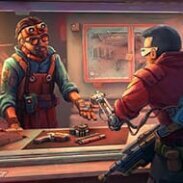
The counter interaction is the heart of Probably Stolen. Every visitor could be an ordinary buyer, a revolutionary looking for leverage, or Security fishing for evidence, and the game never flags which one you are dealing with in advance. Approving the wrong sale or refusing the wrong customer both carry consequences, turning a simple item exchange into a small gamble every time.
Rising rent is the constant pressure underneath all of this. You are working toward buying out the shop outright, and every day that passes without enough profit pushes that goal further away, which keeps players from ever fully settling into a safe, repeatable loop.
Faction Loyalty and the Gun You’d Rather Not Use
Beyond individual customers, Probably Stolen tracks broader faction loyalties across the Lower Levels, and leaning too far toward one side has ripple effects on who walks through your door next. The game also gives you a gun for moments when negotiation stops being an option, though most experienced players treat pulling it as a last resort rather than a strategy, since it tends to make future customers warier rather than safer.
- Balance profit margins against how much scrutiny each product line attracts
- Track faction reputation instead of treating every sale as isolated
- Save enough buffer to survive a raid without losing the whole shop
What happens if you sell to Security by mistake?
Selling contraband to a Security customer in Probably Stolen typically triggers a raid or inspection shortly after, which can wipe out stock and cut into the profit you needed toward buying out your shop.
Which starting trade is easiest for new players?
Water merchant is generally considered the gentlest entry point, since it faces less scrutiny than weapons or contraband while still teaching the core Know Your Customer loop.
Does faction loyalty actually change gameplay?
Yes, favoring one faction on the Lower Levels shifts which customers appear at your counter and how they react to your pricing and product choices over time.
By the time your shop’s rent finally comes due, Probably Stolen has quietly turned a simple retail loop into a running moral calculation, and whether you buy the place out clean or barely limp across the finish line says more about the choices you made at that counter than about any single dramatic event in the game.