

BLOODMONEY!

Dead Plate

Elevator Hitch
Idle Breakout

LOVEMONEY!

My Buddy

Sort The Court: Royal Builder
























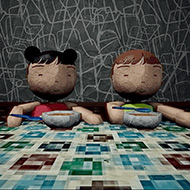
What’s waiting behind a door you haven’t opened yet, in a house that’s gone quiet for longer than feels normal? Family Secrets 1: Empty Plate builds its entire first stretch around that question, walking you through dim, ordinary rooms and letting the silence do most of the unsettling work before anything actually happens.
Movement is first-person and deliberately unhurried. There’s no sprint that feels rewarding to use, no combat option waiting in reserve — just rooms to walk through and objects worth stopping to look at. The pacing asks you to slow down rather than rush toward whatever’s next.
That restraint is the point. A hallway that would take five seconds to cross in most games stretches out here, and the game leans on that stretched-out time to make an ordinary interior feel like it’s hiding something, even in stretches where nothing actually is.
Early on, the tension comes almost entirely from anticipation rather than any real threat. Whether that pays off depends on how much patience you bring to a slow build, since Family Secrets 1: Empty Plate doesn’t rush to justify the quiet.
Most of what you can actually do is small: open a door, examine an object left somewhere it shouldn’t be, move through a room you’ve technically already seen. There’s no puzzle system layered on top and no inventory to manage — the interactions exist to make the space feel lived-in rather than to gate progress.
That minimalism is a deliberate trade-off. Some players find it makes the house feel more convincing, since nothing feels designed purely as a game mechanic. Others have pointed out that with so little to actually do, the middle stretch can drag if the atmosphere alone isn’t landing for you.
Adjusting those expectations early makes a noticeable difference. Once you stop waiting for something loud to happen, the quieter details in each room start to register the way they’re meant to.
No. Every interaction is exploration or object-based, with no fighting or chase mechanic built into the game at any point.
It’s a short experience meant to be finished in a single, unhurried sitting rather than something with hours of content to work through.
Not primarily. The tension leans on atmosphere and pacing far more than on sudden scripted shocks, which is part of why some players find it slower than expected.
Family Secrets 1: Empty Plate isn’t interested in constant momentum, and it never really pretends to be. What it offers instead is a quiet house, the same door-by-door pacing that opens the whole game, and enough restraint to make an empty room feel like it’s worth a second look.
