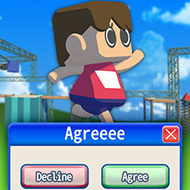
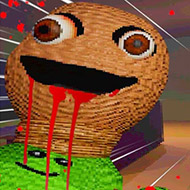
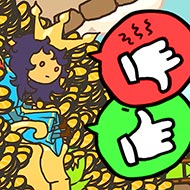
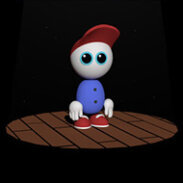
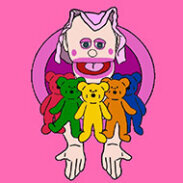
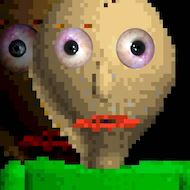
Agreeee looks like a joke about terms of service screens, but it plays like a punishing action puzzle that treats hesitation and haste as equally dangerous. The premise sounds almost too simple to be a game at all: before you can do anything, you have to agree to twelve separate terms and conditions, and every single one of them is lying to you in a slightly different way.
| Genre |
Puzzle, action |
| Platform |
Steam (Windows) |
| Mode |
Singleplayer |
| Core Focus |
Navigating deceptive agreement screens to reach the real game |
The Twelve Agreement Screens in Agreeee
The first thing Agreeee asks of you isn’t a tutorial — it’s an “Agree” button that refuses to behave like one. Across twelve articles of terms of service, the interface shifts rules on you constantly: buttons relocate mid-screen, some inputs get ignored entirely, and a few screens punish you specifically for clicking too fast.
There’s no tutorial explaining any of this. You’re expected to learn each screen’s trick through trial and error, which is exactly the design choice critics singled out when they praised the game for its clever and malicious tricks aimed at player psychology.
New players almost always try to power through the agreement screens the same way they’d click past a real end-user license agreement — fast, on autopilot. That habit gets punished immediately in Agreeee, and relearning it is most of the early difficulty curve.
Doki-Doki Action Game and the Hidden Minigame Library
Once you clear the agreement gauntlet, Agreeee reveals what it was gatekeeping the entire time: a side-scrolling minigame collection the game itself calls Doki-Doki Action Game, packed with more than a hundred distinct minigames. It’s a strange structural choice — burying a large minigame library behind a satirical consent screen — but it reframes the opening hour entirely once you understand what’s on the other side.
Streaming audiences responded strongly to this reveal specifically, since the joke of the agreement screens pays off in a genuinely large amount of content rather than a one-note gag.
Reading Interfaces Instead of Trusting Them
Agreeee’s core skill isn’t reflexes, it’s suspicion. Every screen you encounter, including ones inside Doki-Doki Action Game itself, might not do what it visually appears to do, so learning to test an interface before committing to it becomes the actual mechanic underneath everything else.
- Watch for decoy inputs designed to reset the screen state
- Delay your click slightly when animations seem misleading
- Treat any new screen type as untrustworthy until proven otherwise
This is where community vocabulary gets specific — players refer to the opening stretch as “TOS hell,” a term that shows up constantly in discussion threads and streamer chat.
Timing, Misdirection, and Recovery Windows in Agreeee
Later agreement screens introduce tighter timers alongside the misdirection, which means you’re managing two problems simultaneously: figuring out what a screen actually wants, and doing it fast enough before a penalty triggers. Recovery windows exist for near-misses, but they’re brief enough that relying on them as a primary strategy tends to backfire.
Players who enjoy escape-room logic tend to do well here, since Agreeee rewards the same kind of “test one variable at a time” thinking. Players who came in expecting a straightforward clicker often bounce off this section hardest.
One frequently discussed criticism: because the screens can behave differently between sessions, memorizing a fixed solution doesn’t always transfer cleanly to a second playthrough, which some players find refreshing and others find frustrating.
Why Streaming Audiences Latched Onto Agreeee
Agreeee became a fixture in VTuber and let’s-play circles largely because it’s built for reaction footage — the misdirection lands hardest the first time you see it, and watching someone else get fooled by an agreement screen is genuinely funny even if you already know the trick.
Some sessions of the game have run for hours simply because players kept discovering new agreement-screen behaviors they hadn’t seen before, which speaks to how much variation the developer packed into what looks, from the outside, like a single joke.
What is the twist in Agreeee?
The twist is that the terms-of-service screens aren’t a formality at all — they’re the first real challenge of the game, deliberately designed to punish players who click through agreements without paying attention.
Is Agreeee actually a minigame collection?
Yes. Once you clear the twelve agreement screens, Agreeee opens into Doki-Doki Action Game, a side-scrolling collection built from more than a hundred separate minigames.
Why do people say Agreeee is harder than it looks?
Because the difficulty isn’t reflex-based at first — it’s about reading interface behavior correctly, since buttons and prompts in the agreement screens are intentionally designed to mislead players who assume standard UI logic applies.
Agreeee turns something everyone does without thinking — clicking “agree” — into the sharpest test of attention the game has to offer, and that tension never fully disappears even once Doki-Doki Action Game opens up in full. It’s a strange, small idea executed with a lot more depth than the premise suggests, and that gap between expectation and execution is exactly why it kept players clicking well past the point they meant to stop.