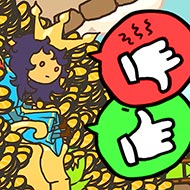
Utouto Suyasuya sounds like a lullaby, the kind of soft onomatopoeia for a child drifting off to sleep, but what actually plays out is a locked-room death game where the wrong answer in a Debate can get someone dragged off screaming.
| Genre |
Horror Mystery Visual Novel |
| Platform |
Browser (HTML5) |
| Core Mechanic |
Majority-vote death game with Discussion and Debate segments |
Waking Up Inside Utouto Suyasuya
Sara Chidouin and her friend Joe Tazuna open the story kidnapped into a facility run by ASU-NARO, fitted with collars that make leaving non-negotiable. Ten other strangers are already trapped inside when they arrive, and the group works out the rules together as they go.
What the facility asks is simple to explain and brutal to sit through: survive a round, and someone has to be voted out, with the collars making that a physical guarantee, not a suggestion.
Horror fans expecting jump scares early on are usually thrown by how much of the opening is quiet dialogue instead, pacing the game eventually pays off.
The Rules of the Sacrifice Game
Every round of what the story calls the Main Game comes down to a majority vote through a Voting Tablet handed to each participant. If two candidates tie for the most votes, both are executed instead of one, turning voting into a genuinely dangerous guess.
Certain participants are secretly assigned Role Cards. A Keymaster who receives the majority takes everyone down with them, while a Sacrifice can, under narrow conditions, save one other person, which is why the Discussion phase matters as much as the vote itself.
Sara ends up holding the Sacrifice role in the very first Main Game. What happens to Joe as a result tells you, within the first hour, how far this game is willing to go.
Clout, Discussions, and Why Talking Is a Survival Skill
Before each vote, the group works through a Discussion phase, and Sara’s ability to stay engaged is tracked through a meter fans call her clout. Losing focus drains it, and if it hits zero she tunes out entirely, its own kind of death sentence in a game built around who gets voted for.
Debates are a distinct minigame: you’re given four statements and must identify the false one before the conversation moves forward. Puzzle-focused players treat these like logic problems, but the game buries the false statement in details that only make sense if you were paying attention earlier.
None of this comes with level progression or stat growth. Sara doesn’t get stronger at Debates over time; the challenge stays as sharp in the later floors as in the first Main Game.
Sara Chidouin, Joe Tazuna, and the Rest of the Cast
Beyond Sara and Joe, the trapped group includes Kanna Kizuchi, Reko Yabusame, Sou Hiyori, Nao Egokoro, and the unmistakably named Q-taro Burgerburg, each with their own reason for ending up in ASU-NARO’s facility. Keiji Shinogi and Gin Ibushi round out a cast split on whether cooperating with the vote system is even the right call.
Some push for transparency, convinced hiding information gets people killed, while others hoard details out of self-preservation.
Reko Yabusame in particular becomes a flashpoint for player discussion later on, since her behavior splits the fandom on how much sympathy she deserves, a disagreement anyone talking about Utouto Suyasuya still brings up.
Meeting the Floor Masters
Once the survivors clear the first floor, they meet the Floor Masters running the level above, Tia Safalin and Rio Ranger, who go by the aliases Hannaki and Toto Noel. Sue Miley, also known as Hoemi, appears earlier and sets the tone for how unreliable the facility’s authorities are.
Further along, a Reception Doll, a character called Midori, and a figure known only as Meister take over guiding later floors, each changing the rules slightly.
By the time you reach the Second Floor, it’s clear the Floor Masters aren’t just narrators dropping in rules, they’re active participants with their own stakes in whether the survivors make it through.
Partner Abilities and the Shape of a Round
Between rounds, the story shifts into point-and-click investigation, where pairing up with specific characters unlocks Partner Abilities needed to get past certain puzzles or reach otherwise locked areas. The puzzles lean on collecting information as much as items, feeding back into Discussion and Debate, so rushing a segment backfires once a vote starts. Stripped to its structure, a full round follows the same basic order regardless of floor:
- Investigate the current area and talk to survivors to gather information
- Work through a Discussion phase, keeping Sara’s clout from bottoming out
- Clear any Debate segments by identifying the false statement among the four presented
- Cast a vote using the Voting Tablet once the group reaches a decision
- Watch the trial resolve, including any Role Card twist that changes who dies
Knowing this order doesn’t make any vote less tense, but it explains why skipping ahead through dialogue during the Discussion step comes back to bite you once the Voting Tablet comes out.
Visual novel readers used to slower, dialogue-first pacing tend to appreciate these stretches, and a short list of minigames testing reaction time breaks up the investigation between them.
The Moment Utouto Suyasuya Stops Being Ironic
There’s a specific sound longtime players bring up more than almost anything: the short confirmation chime the Voting Tablet gives right before it reveals who’s been chosen, a pause of only a couple of seconds that feels longer than the reveal itself.
The honest criticism worth naming is pacing: investigation-heavy stretches between votes can drag, since Utouto Suyasuya spends long sections on dialogue before the next Main Game round starts, a fair trade-off worth flagging.
The contrast between the soft, sleepy title and the machinery underneath it is what makes the game stick. Once Joe’s fate in that first Main Game lands, the title stops sounding ironic and starts sounding cruel.
How does the Majority Vote actually work?
Every participant casts a vote through the Voting Tablet, and whoever gets the most votes is executed at the end of the trial. If two people tie, both are executed instead of one, and if a hidden Keymaster ends up with the majority, the entire group is taken out together.
Who ends up holding the Sacrifice role in the first Main Game?
Sara Chidouin finds a Role Card revealing she’s holding the Sacrifice role, which under the right conditions would let her save one other person. Joe Tazuna is revealed as the actual target, and despite Sara’s attempt to intervene using a device offered to her, he doesn’t survive the trial.
Who are the Floor Masters you meet after the first floor?
Sue Miley, also called Hoemi, appears early on, while Tia Safalin and Rio Ranger, known as Hannaki and Toto Noel, take over once the group reaches the Second Floor. Later floors introduce a Reception Doll, Midori, and Meister, each overseeing a different stretch of the facility.
Utouto Suyasuya keeps its softest word for a title and saves every hard edge for what happens once the first Voting Tablet lights up, and it’s Joe Tazuna’s fate in that very first Main Game that tells you exactly how far the majority vote is willing to go.